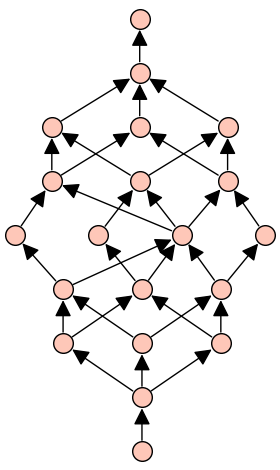
Representation Theory of Algebras and its ApplicationsHSM Special Topic School

Europe/Berlin
Endenicher Allee 60/1-016 - Lipschitzsaal (Mathezentrum)

Endenicher Allee 60/1-016 - Lipschitzsaal

Mathezentrum

90
Pavel Barikin (Hausdorff Center for Mathematics)
Description

In recent years, the representation theory of finite-dimensional algebras has gained increasing prominence, driven by its deep connections and applications to a variety of active areas of mathematics. These include the theory of cluster algebras, topological data analysis, representation theory of posets, and algebraic combinatorics, among others.

With this Special Topics School on "Representation Theory of Algebras and its Applications", we aim to bring together experts, young researchers, and graduate students to explore current developments in the field. The school will offer a series of introductory lecture courses on some of these recent connections, complemented by problem sessions.

Our goal is to foster an interactive and collaborative atmosphere, providing participants with insights into ongoing research directions. The school will also offer opportunities for participants to present their own work, exchange ideas, and build connections within the representation theory community.

The deadline for the application for participation is May 31st, 2026.

Our Global Mobility Fellowships provide participation opportunities for selected researchers and PhD students from countries of the Global South in the Special Topic Schools of the Hausdorff School for Mathematics. For more information, please visit our website.
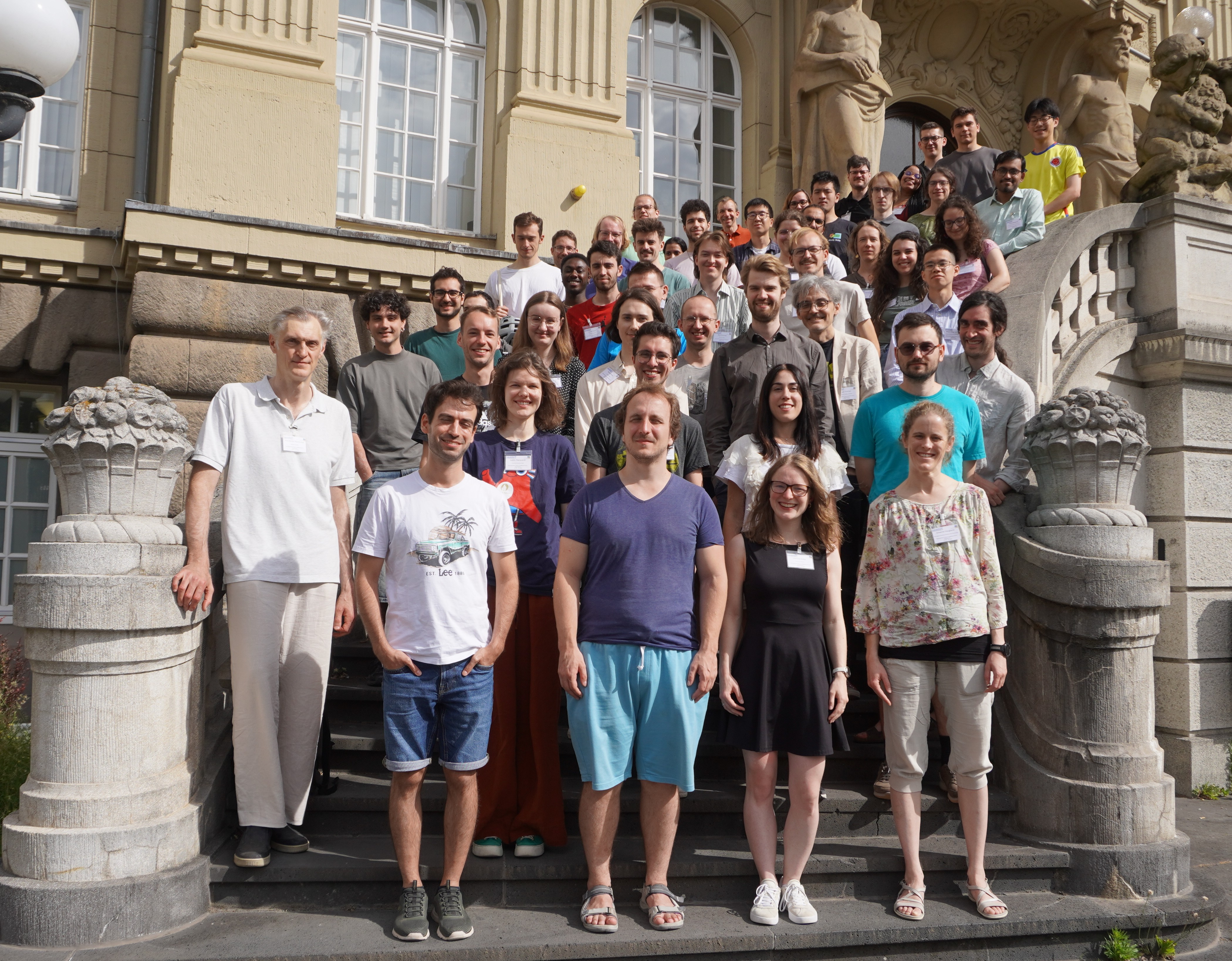
Lecture series by:

  • Johanne Haugland (NTNU)
  • Volodymyr Mazorchuk (Uppsala University)
  • Khrystyna Serhiyenko (University of Kentucky)
  • Hugh Thomas (UQAM)

Additional talks by:

  • Antonia Kekkou (University of Utah)
  • Azzurra Ciliberti (Ruhr-Universität Bochum)
  • Jonas Nehme (Unviersity of Bonn)
  • Marvin Plogmann (Universität zu Köln)

Minitalk Speakers:

  • Carlo Klapproth (University of Stuttgart)
  • Cyril Matousek (Aarhus University)
  • Daniel Perniok (University of Paderborn)
  • Emily Poelders (University of Bonn)
  • Adina Veronica Remor (Federal University of Paraná)
  • Annoy Sengupta (IIT Kanpur)

Tutors for the Lecture Series:

  • Viktória Klász (University of Bonn)
  • Judith Marquardt (Université Grenoble Alpes)
  • Iacopo Nonis (University of Leeds)
  • Mads H. Sandoy (NTNU)

Scientific Organizers:

  • Viktória Klász (University of Bonn)
  • Markus Kleinau (University of Bonn)
  • Rene Marczinzik (University of Bonn)
Participants
    • 8:15 AM
      Self-Registration Endenicher Allee 60/1-016 - Lipschitzsaal

      Endenicher Allee 60/1-016 - Lipschitzsaal

      Mathezentrum

      90
    • 1
      Syzygy categories over Iwanaga-Gorenstein algebras Endenicher Allee 60/1-016 - Lipschitzsaal

      Endenicher Allee 60/1-016 - Lipschitzsaal

      Mathezentrum

      90

      Syzygies are a fundamental topic of study in both commutative and non-commutative algebra. They are defined as submodules of projectives and appear as kernels of projective resolutions that are used to approximate every module. It is then natural to study the category of all syzygies, particularly when the entire module category cannot be explicitly understood.

      In this series of talks, we will explore syzygy categories over Iwanaga-Gorenstein algebras of Gorenstein parameter 1, particularly focusing on the class of 2-Calabi-Yau tilted algebras. In this case, it is known that the syzygy category is triangulated and equivalent to the singularity category of an algebra as well as the category of maximal Cohen-Macauley modules. It is an open question to characterize algebras of finite CM type. As a first step in this direction, we will investigate the behavior of syzygy categories when passing from an algebra A to its quotient A/Ae_iA by an idempotent e_i, which corresponds to deleting a vertex from the quiver of A. Consequently, we describe various equivalent characterizations for these two algebras to have equivalent syzygy categories. We will then focus on the special class of Cohen-Macauley finite algebras, called dimer tree algebras and their skew group algebras, and provide a geometric model for their syzygy categories in terms of their associated checkerboard polygons.

      Speaker: Prof. Khrystyna Serhiyenko (University of Kentucky)
    • 10:00 AM
      Break Endenicher Allee 60/1-016 - Lipschitzsaal

      Endenicher Allee 60/1-016 - Lipschitzsaal

      Mathezentrum

      90
    • 2
      Koszul algebras in representation theory Endenicher Allee 60/1-016 - Lipschitzsaal

      Endenicher Allee 60/1-016 - Lipschitzsaal

      Mathezentrum

      90

      Koszul algebras were first defined by Priddy in 1970. These algebras have been extensively studied and arise naturally in various fields of mathematics, such as algebraic geometry, noncommutative geometry, topology and number theory. In this lecture series, we give an introduction to Koszul algebras and the role they play in representation theory. Many central classes of algebras in representation theory turn out to be Koszul. Examples include hereditary algebras, gentle algebras, quadratic monomial algebras, polynomial algebras and exterior algebras, as well as certain preprojective algebras and trivial extensions.

      A main reason for the importance of Koszul algebras is their duality theory, as studied in the influential paper "Koszul duality patterns in representation theory" by Beilinson, Ginzburg and Soergel. To any Koszul algebra, there is an associated Koszul dual algebra. A key topic in the mini-course is the Koszul duality equivalence and how it reflects the strong connection between a Koszul algebra and its dual. As a motivating example, we look at how Koszul duality manifests in the geometric model for gentle algebras due to Opper, Plamondon and Schroll.

      A core perspective in the lecture series is the notion of higher Koszul algebras, or n-T-Koszul algebras, which yields a natural connection to Iyama's higher Auslander–Reiten theory. This framework builds on a generalization of T-Koszul algebras, as introduced by Madsen and Green, Reiten and Solberg. We discuss a higher version of classical Koszul duality and sketch some applications for n-hereditary algebras. This part of the lecture series builds on joint work with Mads H. Sandøy, who is also responsible for the exercise classes in the course.

      Speaker: Dr Johanne Haugland (NTNU)
    • 3
      Regular Sequences in Triangulated Categories Endenicher Allee 60/1-016 - Lipschitzsaal

      Endenicher Allee 60/1-016 - Lipschitzsaal

      Mathezentrum

      90

      Regular sequences are a fundamental tool in commutative algebra. In this talk, we introduce regular sequences in R-linear triangulated categories, where R is a graded-commutative ring, and give some examples. As an application of this definition, we show that the length of regular sequences provides lower bounds on levels. This is joint work with Janina C. Letz and Marc Stephan.

      Speaker: Antonia Kekkou (University of Utah)
    • 12:00 PM
      Lunch Break Endenicher Allee 60/1-016 - Lipschitzsaal

      Endenicher Allee 60/1-016 - Lipschitzsaal

      Mathezentrum

      90
    • 4
      Representations of lattices, Auslander regularity, and Coxeter permutations Endenicher Allee 60/1-016 - Lipschitzsaal

      Endenicher Allee 60/1-016 - Lipschitzsaal

      Mathezentrum

      90

      In this minicourse, I will be focusing on the representation theory of lattices (that is to say, of their incidence algebras). This turns out to be an interesting setting in which to explore Auslander regularity and related notions, in part because they make contact with certain already studied notions within lattice theory, which I will also discuss. This minicourse assumes no prior knowledge of lattice theory, and the representation theory background required is fairly minimal.

      I will explain the definition of Auslander regularity, and then present the result of Iyama and Marczinzik showing that a lattice is Auslander regular if and only if it is distributive. I will also explain how Auslander regularity (of incidence algebras of lattices) can be read off from the Coxeter matrix. This leads naturally to the notion of Coxeter permutation, and the rowmotion operation on distributive lattices. Finally, I will discuss the extension of rowmotion to semidistributive lattices, the way this manifests in terms of the Coxeter matrix, and how this can also be understood in representation-theoretic terms.

      Speaker: Prof. Hugh Thomas (Université du Québec à Montréal)
    • 3:00 PM
      Break Endenicher Allee 60/1-016 - Lipschitzsaal

      Endenicher Allee 60/1-016 - Lipschitzsaal

      Mathezentrum

      90
    • 5
      Exercise Class Endenicher Allee 60/0-006 - Seminarraum

      Endenicher Allee 60/0-006 - Seminarraum

      Mathezentrum

      Endenicher Allee 60
      20

      There will also be exercises in rooms N0.007 and N0.008.

      Speaker: Prof. Khrystyna Serhiyenko (University of Kentucky)
    • 6
      Exercise Class Endenicher Allee 60/0-006 - Seminarraum

      Endenicher Allee 60/0-006 - Seminarraum

      Mathezentrum

      Endenicher Allee 60
      20

      There will also be exercises in rooms N0.007 and N0.008.

      Speaker: Dr Johanne Haugland (NTNU)
    • 7
      Homological properties of category O Endenicher Allee 60/1-016 - Lipschitzsaal

      Endenicher Allee 60/1-016 - Lipschitzsaal

      Mathezentrum

      90

      In this series of lectures I will try to describe
      various homological properties of BGG category O
      and their relation to the Kazhdan-Lusztig
      combinatorics of Hecke algebras.

      The plan is as follows: the first lecture will
      be about Hecke algebras and Kazhdan-Lusztig
      combinatorics. The second lecture will be
      about basics of category O and its connection with
      Hecke algebras. Finally, the third lecture
      will focus on various homological properties,
      in particular, on projective dimension of
      structural modules and Auslander regularity.

      The excercise classes will treat small rank
      cases in detail, including sl_2 (type A_1)
      and sl_3 (type A_2).

      Speaker: Prof. Volodymyr Mazorchuk (Uppsala University)
    • 10:00 AM
      Break Endenicher Allee 60/1-016 - Lipschitzsaal

      Endenicher Allee 60/1-016 - Lipschitzsaal

      Mathezentrum

      90
    • 8
      Syzygy categories over Iwanaga-Gorenstein algebras Endenicher Allee 60/1-016 - Lipschitzsaal

      Endenicher Allee 60/1-016 - Lipschitzsaal

      Mathezentrum

      90
      Speaker: Prof. Khrystyna Serhiyenko (University of Kentucky)
    • 9
      A Caldero-Chapoton map for the derived category of gentle algebras Endenicher Allee 60/1-016 - Lipschitzsaal

      Endenicher Allee 60/1-016 - Lipschitzsaal

      Mathezentrum

      90

      The derived category of a gentle algebra A can be described via the geometry of surface dissections, where indecomposable complexes of A-modules correspond to possibly infinite graded arcs on the surface, and morphisms between them are encoded by crossings between the associated arcs. Moreover, their mapping cones are given by the resolution of these crossings.
      We introduce a Caldero-Chapoton map in this setting. Specifically, we associate a Laurent polynomial to every finite indecomposable complex, and show that skein relations hold whenever the corresponding arcs cross in the interior. For each complex, its Caldero-Chapoton map specializes to the corresponding element of the Grothendieck group. Furthermore, if A is hereditary, the algebra generated by these functions is an ordinary cluster algebra.
      This is joint work in progress with Esther Banaian, Ilaria Di Dedda, Khrystyna Serhiyenko, Yadira Valdivieso-Díaz and Kayla Wright.

      Speaker: Azzurra Ciliberti (Ruhr Universität Bochum)
    • 12:00 PM
      Lunch Break Endenicher Allee 60/1-016 - Lipschitzsaal

      Endenicher Allee 60/1-016 - Lipschitzsaal

      Mathezentrum

      90
    • 10
      Koszul algebras in representation theory Endenicher Allee 60/1-016 - Lipschitzsaal

      Endenicher Allee 60/1-016 - Lipschitzsaal

      Mathezentrum

      90
      Speaker: Dr Johanne Haugland (NTNU)
    • 3:00 PM
      Break Endenicher Allee 60/1-016 - Lipschitzsaal

      Endenicher Allee 60/1-016 - Lipschitzsaal

      Mathezentrum

      90
    • 11
      Exercise Class Endenicher Allee 60/1-016 - Lipschitzsaal

      Endenicher Allee 60/1-016 - Lipschitzsaal

      Mathezentrum

      90

      There will also be exercises in room N0.007.

      Speaker: Prof. Volodymyr Mazorchuk (Uppsala University)
    • 12
      Exercise Class Endenicher Allee 60/1-016 - Lipschitzsaal

      Endenicher Allee 60/1-016 - Lipschitzsaal

      Mathezentrum

      90

      There will also be exercises in room N0.007.

      Speaker: Prof. Hugh Thomas (Université du Québec à Montréal)
    • 6:00 PM
      Get-Together Endenicher Allee 60/1-016 - Lipschitzsaal

      Endenicher Allee 60/1-016 - Lipschitzsaal

      Mathezentrum

      90
    • 13
      Mini Talks Endenicher Allee 60/1-016 - Lipschitzsaal

      Endenicher Allee 60/1-016 - Lipschitzsaal

      Mathezentrum

      90
    • 11:00 AM
      Break Endenicher Allee 60/1-016 - Lipschitzsaal

      Endenicher Allee 60/1-016 - Lipschitzsaal

      Mathezentrum

      90
    • 14
      Open Problem Sessions Endenicher Allee 60/1-016 - Lipschitzsaal

      Endenicher Allee 60/1-016 - Lipschitzsaal

      Mathezentrum

      90
    • 12:20 PM
      Lunch Break Endenicher Allee 60/1-016 - Lipschitzsaal

      Endenicher Allee 60/1-016 - Lipschitzsaal

      Mathezentrum

      90
    • 15
      Representations of lattices, Auslander regularity, and Coxeter permutations Endenicher Allee 60/1-016 - Lipschitzsaal

      Endenicher Allee 60/1-016 - Lipschitzsaal

      Mathezentrum

      90
      Speaker: Prof. Hugh Thomas (Université du Québec à Montréal)
    • 10:00 AM
      Break Endenicher Allee 60/1-016 - Lipschitzsaal

      Endenicher Allee 60/1-016 - Lipschitzsaal

      Mathezentrum

      90
    • 16
      Homological properties of category O Endenicher Allee 60/1-016 - Lipschitzsaal

      Endenicher Allee 60/1-016 - Lipschitzsaal

      Mathezentrum

      90
      Speaker: Prof. Volodymyr Mazorchuk (Uppsala University)
    • 17
      Categorification of the quantum electrical algebra Endenicher Allee 60/1-016 - Lipschitzsaal

      Endenicher Allee 60/1-016 - Lipschitzsaal

      Mathezentrum

      90

      We introduce the quantum electrical algebra, which is a quantum version of the electrical Lie algebra governing electrical networks. We will then provide a categorification of these algebras via electrical KLR algebras mimicking the classical construction of categorification of the positive half of quantum groups. In addition, this electrical KLR algebra bears close connections to the representation theory of the periplectic Lie superalgebra. (jt. with Catharina Stroppel)

      Speaker: Jonas Nehme (University of Bonn)
    • 12:00 PM
      Lunch Break Endenicher Allee 60/1-016 - Lipschitzsaal

      Endenicher Allee 60/1-016 - Lipschitzsaal

      Mathezentrum

      90
    • 18
      Syzygy categories over Iwanaga-Gorenstein algebras Endenicher Allee 60/1-016 - Lipschitzsaal

      Endenicher Allee 60/1-016 - Lipschitzsaal

      Mathezentrum

      90
      Speaker: Prof. Khrystyna Serhiyenko (University of Kentucky)
    • 3:00 PM
      Break Endenicher Allee 60/1-016 - Lipschitzsaal

      Endenicher Allee 60/1-016 - Lipschitzsaal

      Mathezentrum

      90
    • 19
      Exercise Class Endenicher Allee 60/1-016 - Lipschitzsaal

      Endenicher Allee 60/1-016 - Lipschitzsaal

      Mathezentrum

      90

      There will also be exercises in room 1.008.

      Speaker: Prof. Khrystyna Serhiyenko (University of Kentucky)
    • 20
      Exercise Class Endenicher Allee 60/1-016 - Lipschitzsaal

      Endenicher Allee 60/1-016 - Lipschitzsaal

      Mathezentrum

      90

      There will also be exercises in room 1.008.

      Speaker: Prof. Volodymyr Mazorchuk (Uppsala University)
    • 7:00 PM
      Conference Dinner 'Tuscolo' Endenicher Allee 60/1-016 - Lipschitzsaal

      Endenicher Allee 60/1-016 - Lipschitzsaal

      Mathezentrum

      90
    • 21
      Koszul algebras in representation theory Endenicher Allee 60/1-016 - Lipschitzsaal

      Endenicher Allee 60/1-016 - Lipschitzsaal

      Mathezentrum

      90
      Speaker: Dr Johanne Haugland (NTNU)
    • 10:00 AM
      Break Endenicher Allee 60/1-016 - Lipschitzsaal

      Endenicher Allee 60/1-016 - Lipschitzsaal

      Mathezentrum

      90
    • 22
      Representations of lattices, Auslander regularity, and Coxeter permutations Endenicher Allee 60/1-016 - Lipschitzsaal

      Endenicher Allee 60/1-016 - Lipschitzsaal

      Mathezentrum

      90
      Speaker: Prof. Hugh Thomas (Université du Québec à Montréal)
    • 23
      On extended hearts of t-structures Endenicher Allee 60/1-016 - Lipschitzsaal

      Endenicher Allee 60/1-016 - Lipschitzsaal

      Mathezentrum

      90

      For a finite-dimensional algebra A, the category mod(A) can be
      recovered inside the bounded derived category of A as the full
      subcategory of objects whose cohomology is concentrated in degree 0. A
      natural enlargement is obtained by considering, for a fixed n>0, those
      objects whose cohomology is concentrated in degrees 1-n,...,0. This
      subcategory is called the n-extended heart of the standard t-structure.
      For n=1, one recovers the abelian category mod(A), while for n>1 the
      extended heart is no longer abelian. Nevertheless, it retains many
      features reminiscent of module categories; for example, it admits
      Auslander--Reiten sequences. I will explain why extended hearts are
      useful for studying finite-dimensional algebras and their derived analogues.

      Speaker: Marvin Plogmann (Universität zu Köln)
    • 12:00 PM
      Lunch Break Endenicher Allee 60/1-016 - Lipschitzsaal

      Endenicher Allee 60/1-016 - Lipschitzsaal

      Mathezentrum

      90
    • 24
      Homological properties of category O Endenicher Allee 60/1-016 - Lipschitzsaal

      Endenicher Allee 60/1-016 - Lipschitzsaal

      Mathezentrum

      90
      Speaker: Prof. Volodymyr Mazorchuk (Uppsala University)
    • 3:00 PM
      Break Endenicher Allee 60/1-016 - Lipschitzsaal

      Endenicher Allee 60/1-016 - Lipschitzsaal

      Mathezentrum

      90
    • 25
      Exercise Class Endenicher Allee 60/1-016 - Lipschitzsaal

      Endenicher Allee 60/1-016 - Lipschitzsaal

      Mathezentrum

      90

      There will also be exercises in room 0.006.

      Speaker: Dr Johanne Haugland (NTNU)
    • 26
      Exercise Class Endenicher Allee 60/1-016 - Lipschitzsaal

      Endenicher Allee 60/1-016 - Lipschitzsaal

      Mathezentrum

      90

      There will also be exercises in room 0.006.

      Speaker: Prof. Hugh Thomas (Université du Québec à Montréal)